7 Key Decision Points in a Complete Guide to Ship Deck Machinery Procurement
When a new ship enters the equipment procurement phase, the choice of deck machinery often determines its operational efficiency and safety for the next 15-20 years. However, the reality is that too many buyers focus solely on price initially, only to incur significantly higher maintenance costs and downtime losses later on.
Our 10 years of collaboration with global shipyards and shipping companies have shown that professional procurement decisions are never based on a comparison of a single parameter, but rather a comprehensive assessment of technical specifications, compliance certifications, supply chain reliability, and total lifecycle cost.
This article breaks down 7 key decision points for ship deck machinery procurement to help you make more informed choices in the market environment of the new year.
1. Define Ship Type and Operating Conditions
This is the most easily overlooked first step.
Different ship types have vastly different requirements for deck machinery:
|
Ship type |
core equipment |
Key operating condition requirements |
|
bulk carriers |
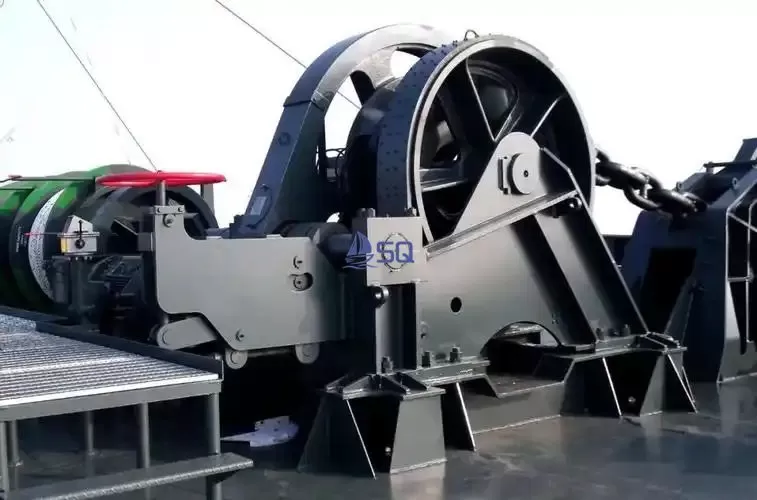
Anchor winches, mooring winches |
High load capacity, corrosion resistance, and adaptability to tropical seas |
|
Tankers/Chemical Tankers |
Mooring winches, cranes |
Explosion-proof certification, ATEX standard, quick release system |
|
tugboat |
Towing winches, anchor winches |
High frequency of use, reliability of emergency braking |
|
Engineering vessel |
cranes, winches |
Precise positioning and dynamic compensation capabilities |
|
Port operation vessels |
Quick-release winches and mooring equipment |
Easy to operate and short maintenance cycle |
Practical Advice: Before requesting a quote, provide the supplier with a complete list of ship parameters (including classification society, navigation area, and expected service life). This allows the supplier to provide a more accurate configuration plan, avoiding change costs due to specification mismatches later.
2. Classification Society Certification: More Than Just "Having a Certificate"
In the 2026 marine equipment market, compliance requirements are more stringent than ever before. However, simply stating "I have CCS certification" is no longer sufficient.
You need to confirm:
A. Does the certification scope cover the specific equipment model?
• Many suppliers' certificates only cover some models; customized equipment requires separate certification.
• Inquire: What is the certificate number for this model? Can you provide a copy of the certificate?
B. Additional Certification Requirements for Target Shipping Areas
• Europe and America Routes: May require certification from classification societies such as DNV, ABS, and LR.
• Middle East: Some ports require additional Gulf state certifications.
• Polar Routes: Material certification for cryogenic environments (usually requiring -40°C impact testing).
C. Certification Validity Maintenance
• Are there annual audit requirements for certificates?
• Is recertification required after equipment modification?
Industry Insight: We encountered a case where a shipyard purchased anchor winches with only a CCS certificate, but the vessel needed to be registered under the Panamanian flag. Ultimately, they had to spend 3 weeks and an additional 15% cost to obtain ABS certification. Asking questions upfront can save you trouble later.
3. Hidden Pitfalls in Core Technical Parameters
3.1 Anchor Winches: Break Holding Load vs. Rated Load
Many suppliers only specify "rated load," but in actual operation, break holding load is more important.
• Rated Load: The maximum load the equipment can operate normally.
• Holding Load: The maximum load the braking system can hold (typically 1.5-2 times the rated load).
Procurement Questions:
• What is the holding load for this model?
• Is the braking system belt-type or disc-type? (Disc-type has longer maintenance intervals)
• Is it equipped with an emergency manual release function?
3.2 Winches: Single-Layer Pulling Force vs. Multi-Layer Pulling Force
The pulling force parameters for mooring winches and towing winches need to clearly indicate which drum layer was measured on.
• Single-Layer Pulling Force (First Layer): Maximum pulling force value
• Multi-Layer Pulling Force (Fully Winded): May decrease by 30-40%
Practical Experience: Request the supplier to provide a pulling force-layer curve; this can help you evaluate performance under actual working conditions.
3.3 Hydraulic System: Selection of Working Pressure
• Low-pressure system (≤16MPa): Low cost, simple maintenance, suitable for small vessels
• Medium-pressure system (16-25MPa): Balances performance and cost, most commonly used
• High-pressure system (≥25MPa): High power density, suitable for large vessels with limited space
Note: High-pressure systems require higher cleanliness of hydraulic oil and necessitate more sophisticated filtration systems.
4. Material Selection and Corrosion Protection
Corrosion problems in marine equipment are particularly prominent in tropical waters. Here are material recommendations for key components:
Anchor Sprockets/Sprockets:
• Standard configuration: Q345D steel, surface hardened
• Highly corrosive environments: Stainless steel cladding or thermally sprayed zinc-aluminum coating recommended.
Rollers and Drums:
• Must undergo overall annealing after welding to eliminate welding stress.
• Surface corrosion protection: Sandblasting Sa2.5 grade + epoxy zinc-rich primer + polyurethane topcoat (total dry film thickness ≥200μm)
Fasteners:
• Minimum requirement: Grade 8.8 galvanized bolts
• Recommended: A4-80 stainless steel bolts (especially suitable for tankers and chemical tankers)
New trends in 2026: More and more shipowners are requiring suppliers to provide corrosion protection warranties, specifying coating life and warranty periods (typically 5-8 years).
5. Supply Chain Reliability Assessment
Equipment delivery is just the beginning; the supply of spare parts throughout the entire lifecycle is crucial.
Five Questions to Ask When Assessing a Supplier's Supply Chain Capabilities:
A. Inventory Strategy for Critical Spare Parts
• Are there safety stocks available for commonly used spare parts (seals, brake pads)?
• What is the shortest lead time for urgent orders?
B. Completeness of Technical Documentation
• Are bilingual (Chinese and English) operation manuals provided?
• Are a list of vulnerable parts and exploded views provided?
• Are hydraulic schematics and electrical wiring diagrams delivered with the equipment?
C. Remote Technical Support Capabilities
• Are video tutorials provided?
• Fault diagnosis response time commitment?
D. Field Service Network
• Are there authorized service providers at the target port?
• How are travel expenses for overseas field services calculated?
E. Equipment Traceability System
• Can original manufacturer traceability codes for critical components (motors, gearboxes, hydraulic pumps) be provided?
• This relates to the ease of warranty claims later on.
Case Study: We supplied anchor winch spare parts for a bulk carrier operating in Southeast Asia. Because we had established equipment files and spare parts lists in advance, the urgent order was shipped from Chongqing to Singapore port within 72 hours. Supply chain responsiveness is sometimes more important than equipment price.
6. Total Lifetime Cost (TCO) Analysis
Smart buyers no longer just look at the purchase price, but calculate the total cost of ownership over 10-15 years.
TCO Composition Model:
TCO = Procurement Cost + Installation Cost + (Annual Maintenance Cost × Service Life) + Downtime Loss Risk + Residual Value
Typical Proportions (15-Year Cycle):
- Procurement Cost: 35-40%
- Maintenance Cost: 25-30%
- Downtime Loss: 20-25% (Difficult to quantify but with significant impact)
- Residual Value: 5-10% (Resale or dismantling possible)
Practical Strategies to Reduce TCO:
A. Choose Modular Design: Key components can be replaced individually, eliminating the need for complete machine scrapping.
B. Request Extended Warranty: Pay an extra 5-8% for a 3-year warranty (standard is usually 1 year).
C. Bundled Procurement: Purchasing anchor winches + hoists + cranes from the same supplier typically yields a 10-15% discount and a more consistent spare parts system.
D. Preventative maintenance plan: Require the supplier to provide free initial maintenance and an annual inspection checklist.
7. Delivery, installation, and commissioning
This is the stage most prone to disputes.
Pre-delivery Checklist:
• Factory Acceptance Test (FAT) report
• Original classification society inspection certificate
• Comparison of packing list and physical items
• Equipment appearance inspection (transportation damage)
• Inventory of spare parts and tools
• Confirmation of technical document completeness
Key Installation and Commissioning Milestones:
A. Foundation Inspection: Ensure base flatness ≤ 2mm/m, anchor bolt hole position deviation ≤ 3mm
B. Alignment and Calibration: Motor and reducer coaxiality ≤ 0.05mm
C. Hydraulic System Flushing: Cleanliness reaches NAS 7 or higher
D. No-load Trial Run: Continuous operation for 2 hours, checking for temperature rise, noise, and leakage
E. Load Test: 110% rated load test, duration as required by the classification society
Recommendation: If conditions permit, send technical personnel to participate in the factory acceptance test; this can identify 80% of potential problems in advance.
8. Conclusion
Procuring ship deck machinery is not simply a matter of "comparing prices," but rather finding the optimal balance between technology, cost, time, and risk. The essence of procurement decisions is risk management.
Based on our experience serving over 200 ship projects, the time invested in technical evaluation and supplier selection upfront will yield a tenfold return in later stages. A professional supplier is not only an equipment provider, but also a technical partner throughout the entire lifecycle of your vessel.
Share this 7 Key Decision Points in a Complete Guide to Ship Deck Machinery Procurement